






































The big PLUS for robots
07.01.2026
The new Robot PLUS portfolio from SCHUNK offers versatile options for flexible robotic automation. It includes tool changers, compensation units, and 6-axis force/torque sensors, all of which can be combined in various ways with grippers from SCHUNK’s comprehensive portfolio. This enables SCHUNK to provide flexible and efficient end-of-arm solutions from a single source.
Flexibility is key for modern automation – and SCHUNK provides the right solutions. The technology pioneer is expanding its future-proof end-of arm portfolio for robot applications made by SCHUNK in Germany. The portfolio covers the area between the robot flange and the end effectors and can be flexibly adapted to individual requirements. In doing so, the company is setting the course for the future, while building on decades of experience in automation technology.
Tool changers: mastering component variety efficiently
With a tool changer, robots are able to perform a variety of handling or machining tasks flexibly and without additional set-up time. They allow grippers, tools, and other end effectors to be exchanged quickly and easily. This minimizes downtime. The Robot PLUS portfolio currently includes three different products in this category.
For industrial applications, both CPS and CPB tool changers are ideally suited. They exchange end effectors fully automatic via pneumatics. Moreover, they allow various media transfers through a wide range of signal, pneumatic, fluid, and communication modules.
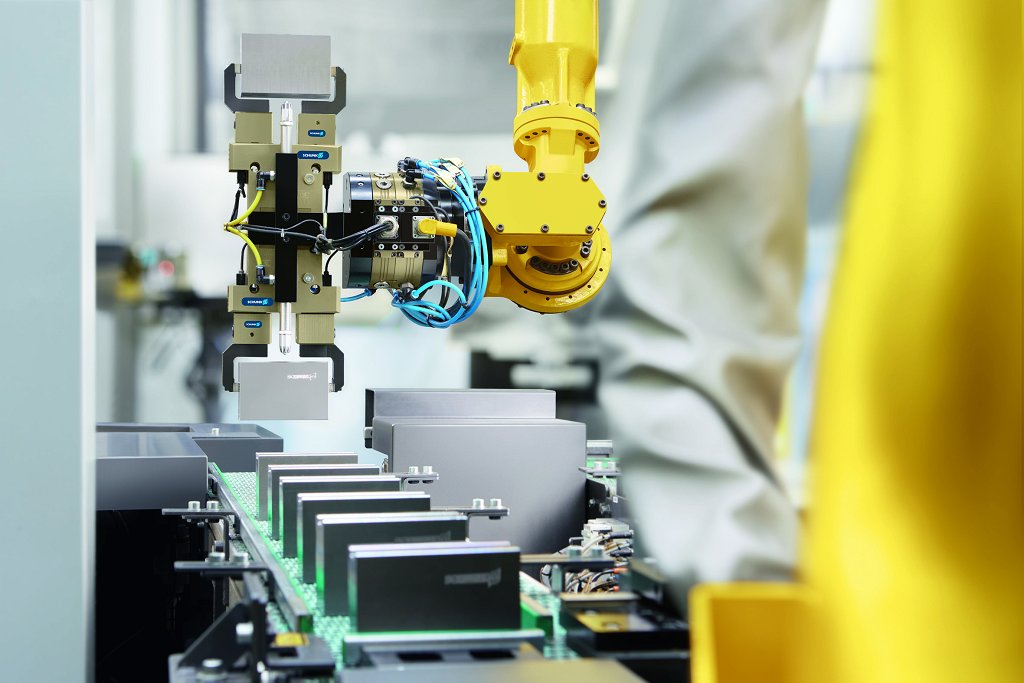
Photo: The CPS tool changer is fully compatible with existing SCHUNK systems. With fast change cycles between different end effectors, it minimizes machine downtime and increases productivity.
Photo source: SCHUNK SE & Co. KG
The CPS tool changer is a flexible all-rounder, where the change master (CPS-K) and the adapter (CPS-A) are connected form-fit and process-reliably via a ball-seated locking mechanism. The system enables a rapid and process-reliable exchange of grippers and other tools with a handling weight of up to 1,000 kg. Since all functional parts are made of hardened steel, the CPS is suitable for use in harsh industrial environments. The series comprises 18 sizes, offering the matching changer for any robot. When replacing existing SCHUNK changers, users do not need to re-teach, as the CPS is fully compatible.
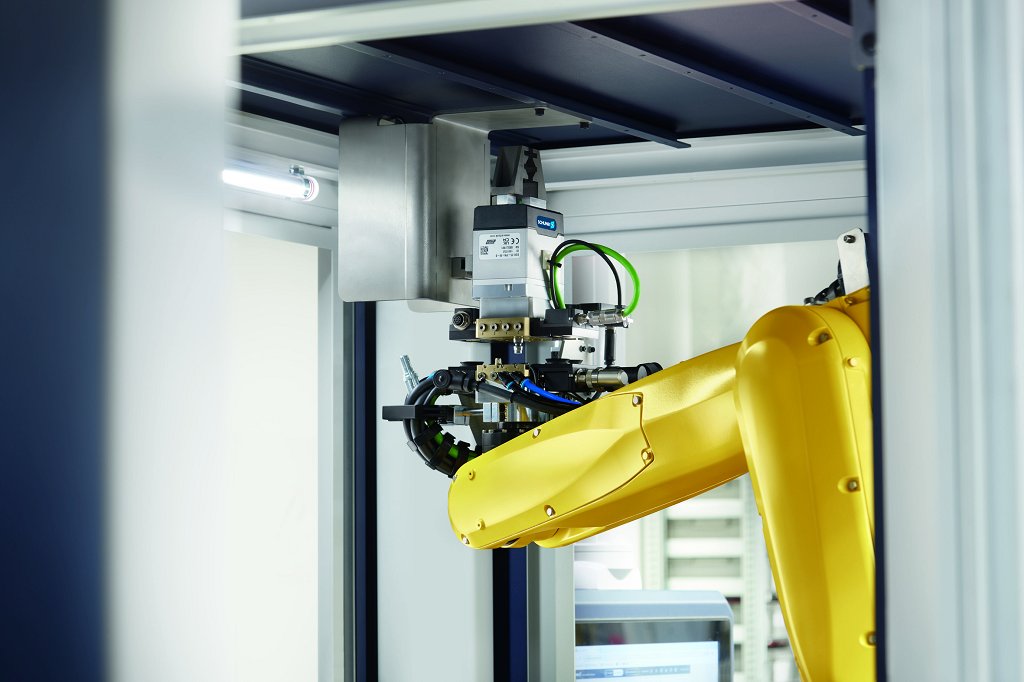
Photo: The efficient CPB tool changer features a robust pin-based locking mechanics. SCHUNK has drown on over 20 years of experience in stationary workholding to bring this proven system from the machine table to the robot for this purpose.
Photo source: SCHUNK SE & Co. KG
The CPB tool changer ensures efficient tool changes, providing maximum flexibility and process-reliability. The special feature of the CPB is its robust locking mechanism with pins. SCHUNK has leveraged over 20 years of development experience in stationary workholding, bringing the proven system from the machine table to the robot. The form-fit, self-retaining pin mechanism made of vacuum-hardened stainless steel offers maximum stability and long service life. The integrated ISO interface allows for fast assembly and reduces the commissioning effort.
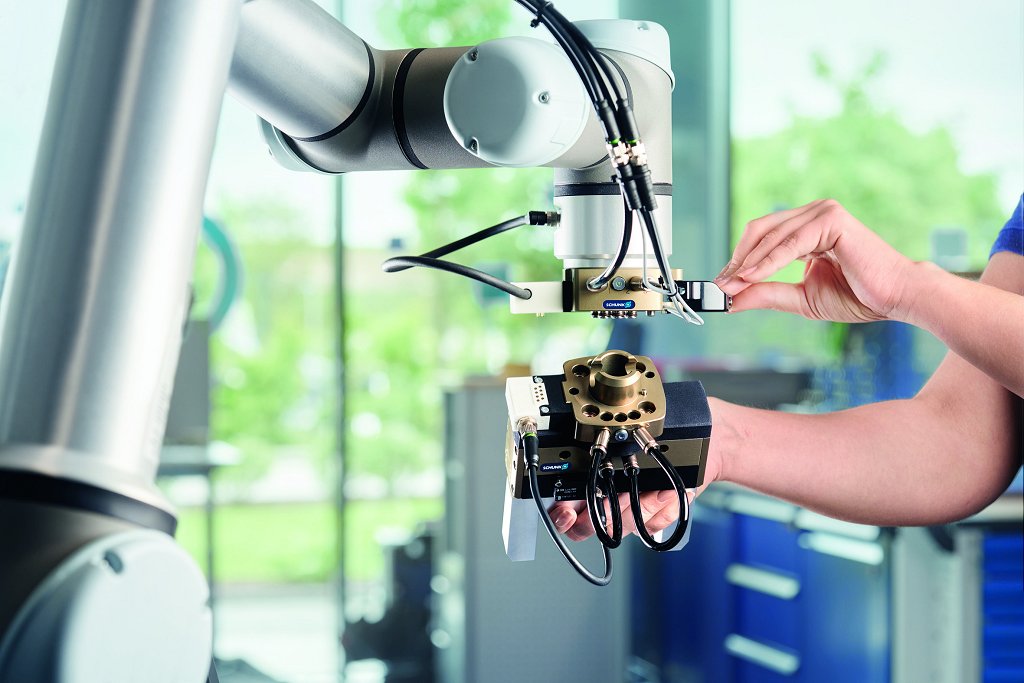
Photo: The user-friendly CMS manual change system can be locked and unlocked easily and conveniently - without the need any additional tools.
Photo source: SCHUNK SE & Co. KG
The manual CMS change system is the ideal addition to various tasks in manufacturing, handling technology, or at assembly workstations. This compact and user-friendly system allows for quick changes at the robot‘s front end. Thanks to the proven push-lever technology, the CMS can be easily locked and unlocked with minimum effort and without the need of any additional tools. It handles payloads up to 58 kg. The integrated monitoring sensor system also ensures operational and process reliability. Thanks to the ISO flange pattern, the CMS can be mounted to any standard robot type without an additional adapter plate.
Modular compensation unit with a high payload capacity
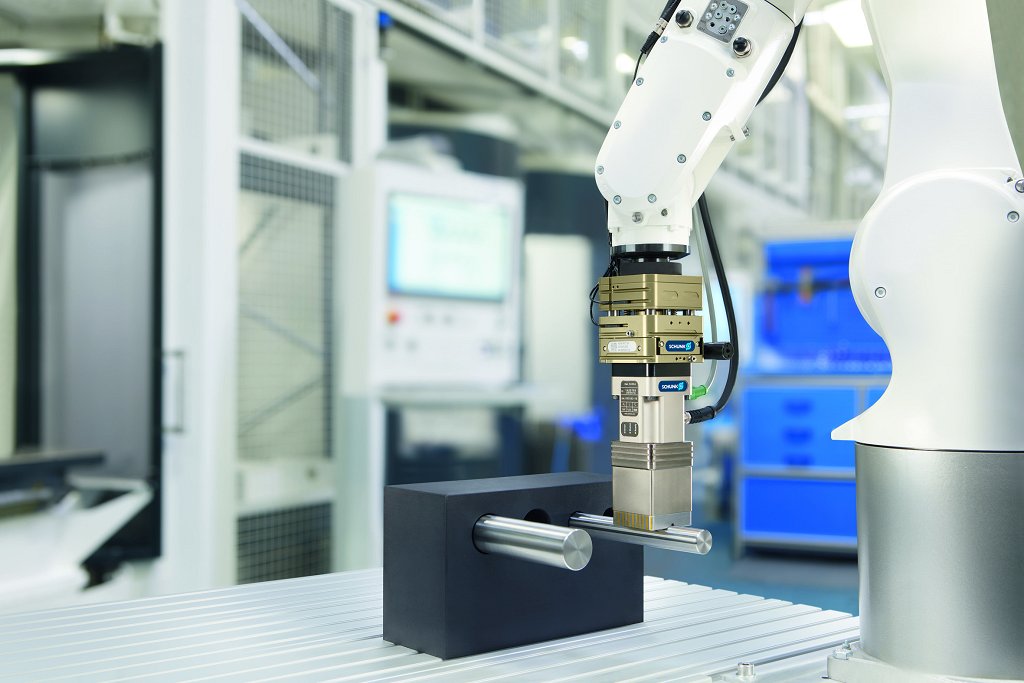
Photo: The AGM compensation unit compensates for tolerances, enhancing process stability and efficiency. It stands out for its high payload capacity, multi-directional compensation behavior in any direction, and wide variety of available versions.
Photo source: SCHUNK SE & Co. KG
The AGM compensation unit effectively compensates tolerances in automated processes with robots. This helps prevent, for example, jamming situations when loading and unloading machine tools, inaccuracies in joining processes, or sticking during bin picking. The modular AGM product range comprises 23 sizes, so there is no need to compromise on interfering contours. With a wide range of variants available, users will always find the right unit for every application. The AGM also scores highly when it comes to compensation behavior: it can compensate for movements in all directions, (XY, Z, W) and their combinations (XYZ, WZ). Particularly impressive is the high payload capacity, which spans from just a few grams to over 400 kg. The patented spring and air cartridges ensure reliable weight compensation – even in horizontal or inclined positions – while the sturdy and robust guides ensure a long serve life.
6-axis force/torque sensors: because precision matters
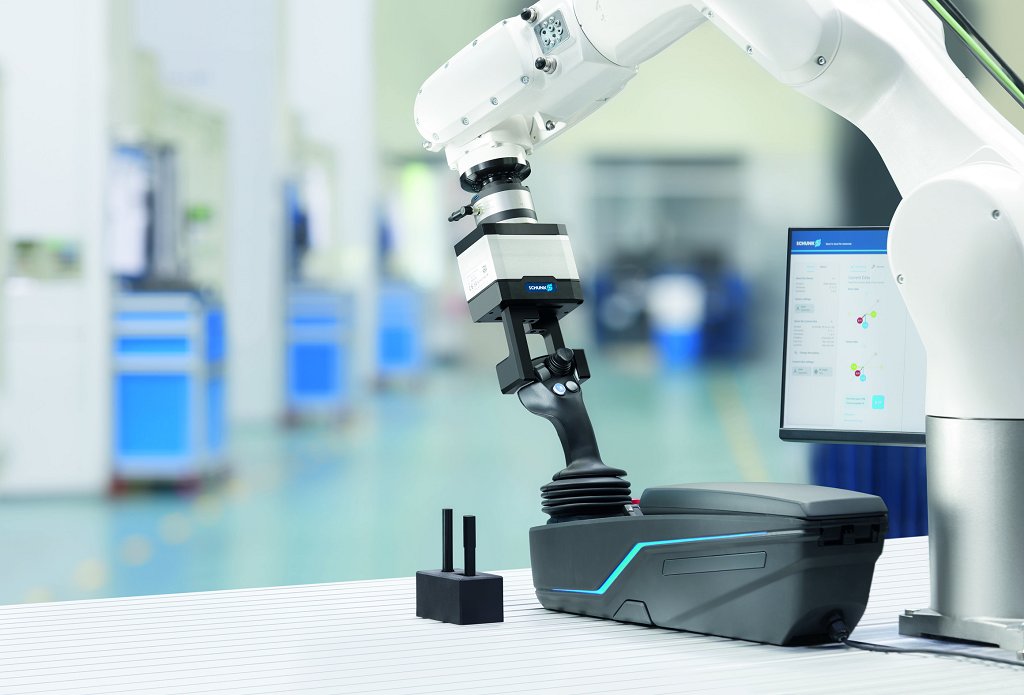
Photo: The FTS force/torque sensor captures process forces and moments with high resolution and precision, ensuring consistent quality and reliable results in automated manufacturing.
Photo source: SCHUNK SE & Co. KG
Whether for quality control - for example in the battery manufacturing for e-Mobility - process monitoring, or grinding and assembly tasks: the FTS 6-axis force/torque sensor captures process forces and moments with high resolution and precision. This enables reliable evaluation of all acting forces. Continuous monitoring ensures consistently high manufacturing quality and precise results. Equipped with IP67 protection class, the FTS sensor is available in nine sizes and delivers dependable performance even under challenging conditions. The interface box with support for EtherNet/IP, EtherCAT, and PROFINET ensures easy integration into existing systems.
With the Robot PLUS portfolio, SCHUNK creates versatile options for flexible robotic automation. Thanks to decades of expertise in developing tailored, well-engineered automation components, SCHUNK stands for exceptional productivity, flexibility, and resource efficiency.
Follow-up: Three questions for Sebastian Höpfl, Executive Vice President, Gripping Technology & Automation Technology at SCHUNK
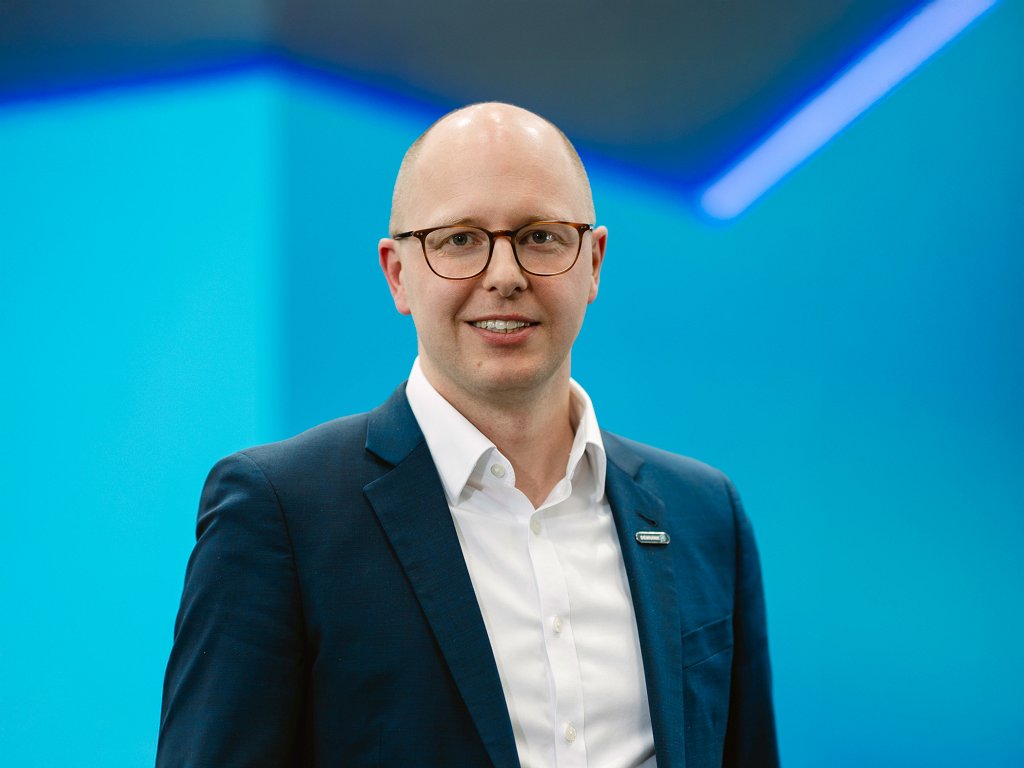
Photo: Sebastian Höpfl, Executive Vice President, Gripping Technology & Automation Technology at SCHUNK.
Photo source: SCHUNK SE & Co. KG
What are the biggest challenges in robotic automation today?
“The increasing complexity of applications presents major challenges for companies: handling a growing variety of different components in demanding processes with high productivity is the task at hand. Therefore, robotic solutions today must not only be precise and efficient, but above all highly flexible. At the same time, users expect these solutions to be easy to integrate – even into existing production environments. And all three aspects – productivity, flexibility, and simplicity – must also be combined with high reliability. After all, the goal is to minimize downtime and ensure stable production.“
What added value does SCHUNK offer its customers with the new portfolio?
“Our customers require expert consultation in system planning, high worldwide availability of standard components, and the fastest possible responsiveness in sales and after-sales. This also applies to Robot PLUS. The coordinated components make processes in robotic automation more efficient, flexible, and productive. The highest quality standards ensure maximum tool service life in the systems. A large part of the portfolio is available from stock and supplied worldwide through our network of subsidiaries. These added values help optimize modern production environments an thus ensure long-term investment security. We draw on decades of experience in automation, extensive engineering expertise, and a global network to achieve this.”
How does SCHUNK support companies in implementing automation solutions?
“We follow a comprehensive approach that considers both newcomers to automation and those who are already advanced and have specific requirements. We provide support from analysis and consulting through to concept development, validation, and final commissioning. Our portfolio includes standard components that can be adapted to meet our customers‘ needs. For customized special solutions, we offer fast, industry-specific engineering that flexibly adapts to individual customer requirements. And we do this globally, with local contacts on site. This way, we support our customers in every phase of automation – ensuring smooth implementation and long-term success.”
Which target applications and industries is the Robot PLUS portfolio used for?
“The Robot PLUS portfolio is designed to be so versatile that it can be used in a wide range of industries and applications. We see great potential especially in our focus industries – automotive, e-mobility, life sciences, electronics, and aerospace. One example from the e-mobility industry is our CPS tool changer, which is used in battery cell production. It enables fast and precise tool changes to efficiently perform various handling and assembly steps. In the automotive and aerospace industries, our AGM compensation unit is frequently used. It compensates for tolerances, such as during the loading and unloading process of machine tools or in joining processes, ensuring smooth operations and high process reliability. Thanks to the flexibility and precision of our products, the solutions can be individually adapted to demanding applications – regardless of the industry or specific requirements.”
Source: SCHUNK