






































From Bending to Business: How Panel Bending Evolution Drives Profitability
17.04.2026
Starting from the expansion of the P2 range up to the integration of robotics and artificial vision, Salvagnini is embracing the new age of panel benders. The Vicenza-based Group is guiding the paradigm change in sheet metal bending, where the reduction in cost per part is motivating the investment cost.
With 5,000 installations in more than 80 countries, the largest European facility dedicated to the production of panel benders and 50 years of experience and competence, Salvagnini is without a doubt the most authoritative company in the world of panel bending. This technology, which was developed and introduced to the market in the 70s by Salvagnini itself, is still their core business. Panel bending is in fact undergoing a moment of significant growth thanks to the innovative solutions that have been introduced, making it a process that is more flexible than ever before.
For years, the sheet metal working industry has been assessing, from both a technological as well as from a cultural point of view, the pros and cons of the two approaches to sheet metal bending. On the one hand, the reassuring tradition of the manual press brake, on the other the growing needs to reduce the set-up times, overcome the labor shortages, maintain the level of product quality high over time and manage the considerable variability in the production batches. In this scenario, panel benders stopped being a solution for a few and are taking on an important role in modern factories.
 To provide an overview of the directions in which this technology is developing, its positioning on the market and the latest features available, we met Nicola Artuso, Product Manager for Bending Technologies at Salvagnini.
The cultural leap
The first obstacle when promoting panel benders is often psychological. Still today, even though it is a mature technology, even companies that are used to performing complex machining can be somewhat resistant to the introduction of these machines.
“We are working a lot to educate the manufacturing sector about this technology – explains Artuso. It is often assumed that the press brake is easy to use, but that is not the case at all if you do not understand it fully. The panel bender, on the other hand, has become extremely accessible due to the evolution of the software. Today, all you have to do is load the 3D model and our STREAMBEND CAM software will process it, automatically generating the bending program. The operator only has to follow simple on-screen instructions to position the flat part, leave the safety area, start the cycle, and collect the bent panel, making production easier and helping mitigate labor shortages.”
From the investment cost to the cost per part
Another aspect that emerged during the interview concerned how businesses approach the investment. The initial budget required for a panel bender, which is higher than for a standard press brake, often leads to believing that the machine must operate three shifts to achieve a return on investment and is suitable only for series production.
“Also this is a paradigm we are trying to dismantle – explains Artuso. Imagine that you have a batch and will produce it using a press brake, for a total of 24 working hours. Our data shows that a panel bender, in general, is 3 to 5 times faster than a press brake. Producing the same batch using a panel bender, therefore, could require a third of the time in the worst case scenario: 8 hours. In this case, production using a panel bender frees up two thirds of production capacity. And not just that. If, for example, you did not have other parts to produce, you could leave the machine off, still obtaining considerable savings from the point of view of fixed costs: you would have still saved the costs of two full work shifts. I am not speaking only of the salary of a skilled operator, but also the costs of the structure, lighting, heating or cooling. The benefit of the panel bender can increase based on the production: a new customer of ours, with almost no experience in sheet metal working, increased their production to 7 times what it was using the previous manual process only by including a robotized panel bender.”
The panel bender, with all its benefits related to flexibility, speed, precision, and automation, therefore becomes the ideal machine also for managing small batches and sudden peak periods, increasing productivity and guaranteeing reduced delivery times without bottle necks resulting from tool changes.
The range is renewed: the new panel bending platform
After listening to the needs of the market, from subcontractors to large manufacturers, Salvagnini decided to update its range, expanding its offer to include larger dimensions as well as optimize more compact sizes.
The most significant development is the presentation of the P2-3020 model, a panel bender capable of bending flat parts with lengths of up to three meters. “When talking with customers, we discovered that bending a three-meter panel on a traditional press brake requires enormous physical effort, and often requires two operators and complex sheet following systems, especially in the case of bend inversions – explains the Salvagnini manager. Ergonomic management is clearly easier with the P2-3020: the operator only has to position the flat part horizontally and then collect the bent panel, and can use simple roller conveyors or lifting equipment.”
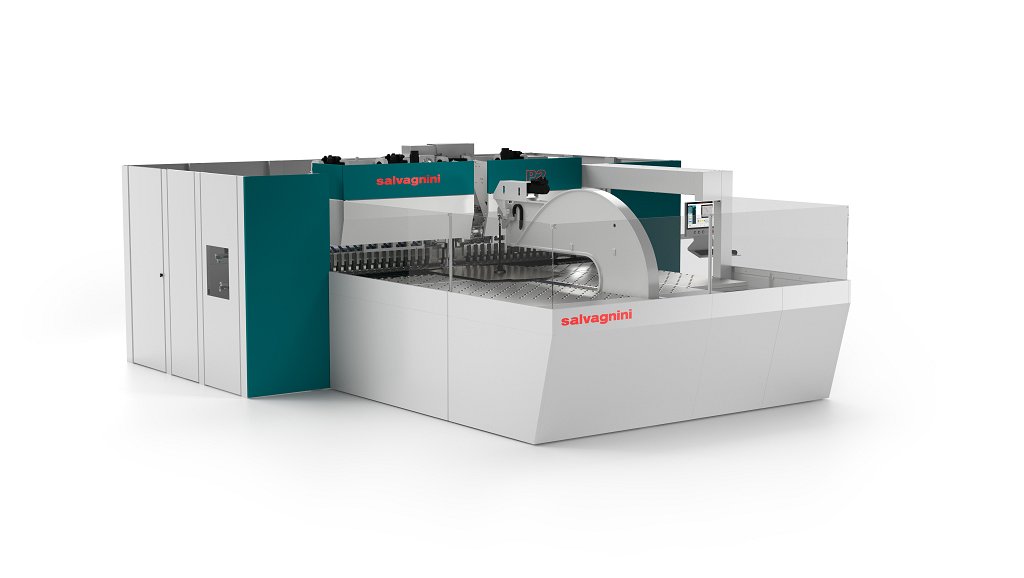
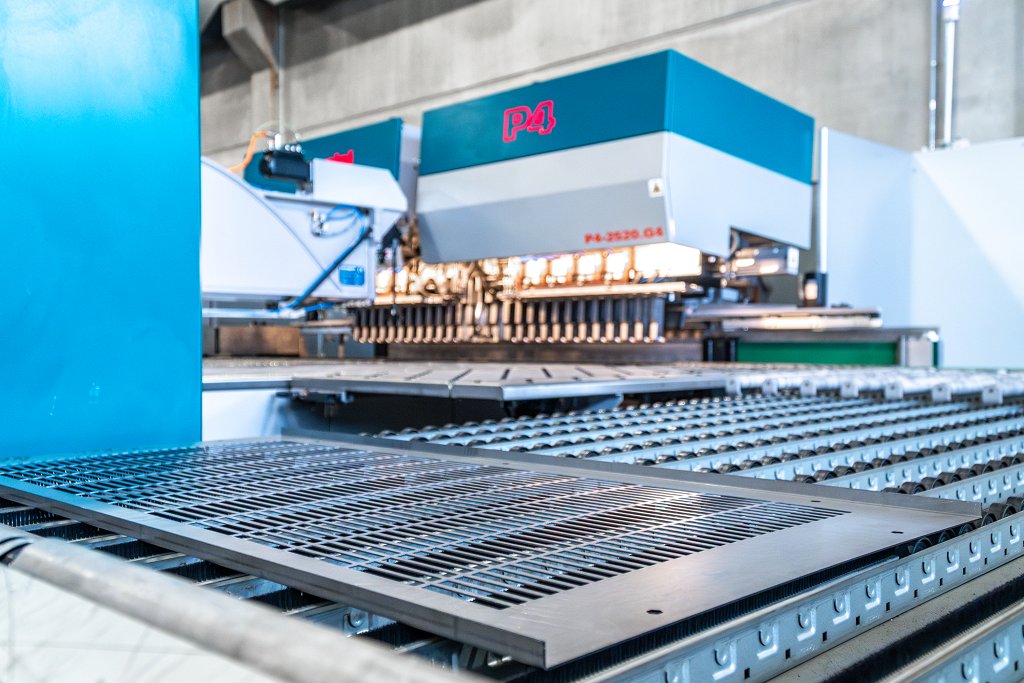
The market’s response demonstrates considerable interest, especially in the United States, but also in Europe and Asia. Technologically, the P2-3020 can count on all the options available for P4, Salvagnini’s flagship panel bender, with the only difference that it does not have the totally automatic loading and unloading devices.
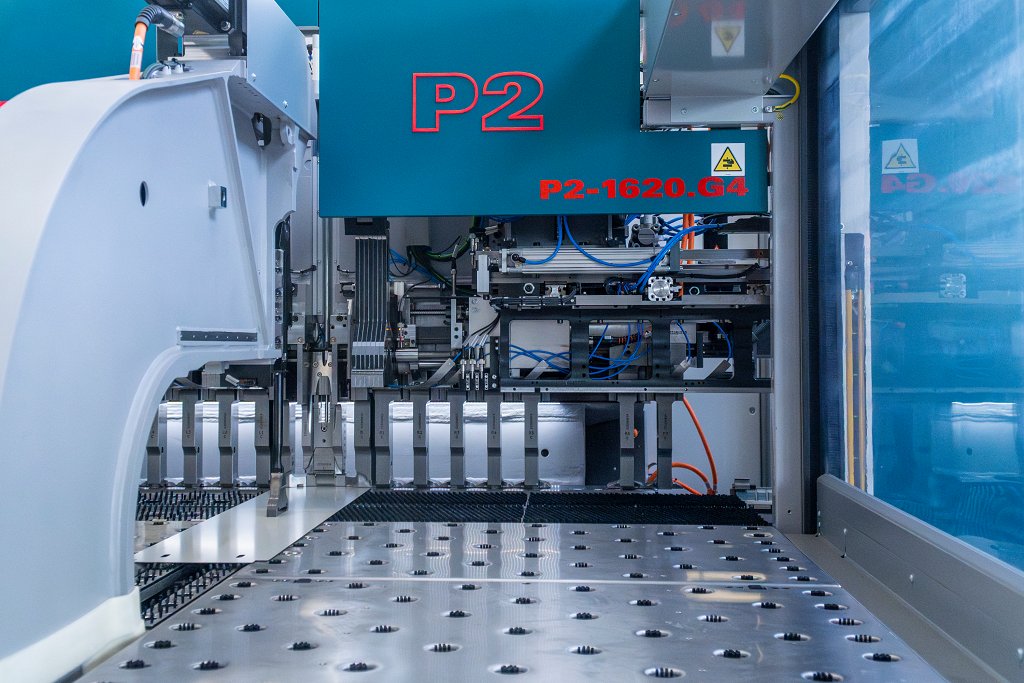
The P2-1620 model was introduced in 2024 for more compact footprint. “In some sectors, the bent thicknesses and heights remain those typical of our larger models; but the maximum length is less than 1600 mm – states Artuso. The P2-1620 is the response to these needs: it is a complete machine that can bend thicknesses up to 3.2 mm and cover 80% of the lengths required in a wide range of industrial sectors.”
Evolving into a work center
The flexibility of the Salvagnini panel bender is also due to its wide range of options from which the customers can select based on their industry and their production needs. More complete configurations are generally requested from subcontractors who equip their systems with all available options to guarantee maximum versatility to acquire future orders.
Some of the most successful equipment includes: CLA tools, estimated to be on 90% to 95% of all sold machines, which make it possible to perform auxiliary bends, welding tabs and small positive and negative flanges, making them essential for more complex geometries; P tools, which make it possible to manage complex applications; the CUT option, which permits shearing profiles directly in the machine, transforming the panel bender into a real work center. These options can exist together, and contribute towards considerably expanding the application range of the technology.
The future is becoming smarter
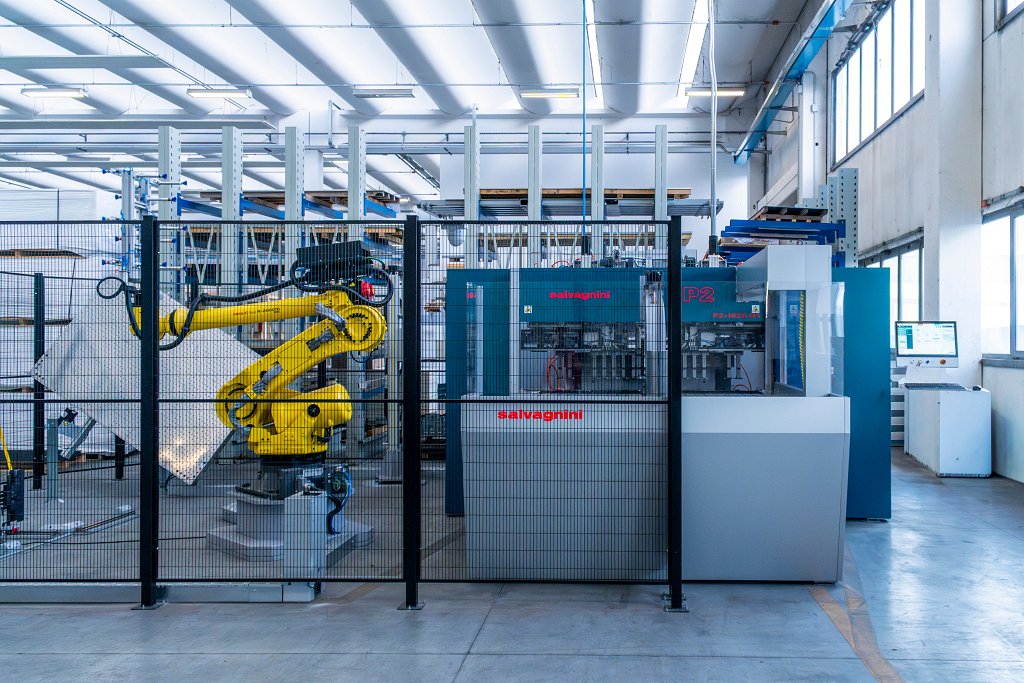
If it is true that the P4 panel benders have always been automated to be inserted into complex lines, such as the renowned S4+P4 line, the real revolution over the past years concerns the automation of the stand-alone machines, in particular with the P-Robot.
“This request came directly from our customers – recalls Artuso – who asked us to be able to automate the P2 to manage unmanned shifts, optimize workshop layouts or have the flexibility to alternate automatic batches with single parts loaded manually.”
P-Robot responds to these needs by offering various levels of automation: from the simple loading/unloading from pallets on the ground up to its integration in flexible manufacturing systems that feed the panel bender in a fully autonomous manner without any interruptions.
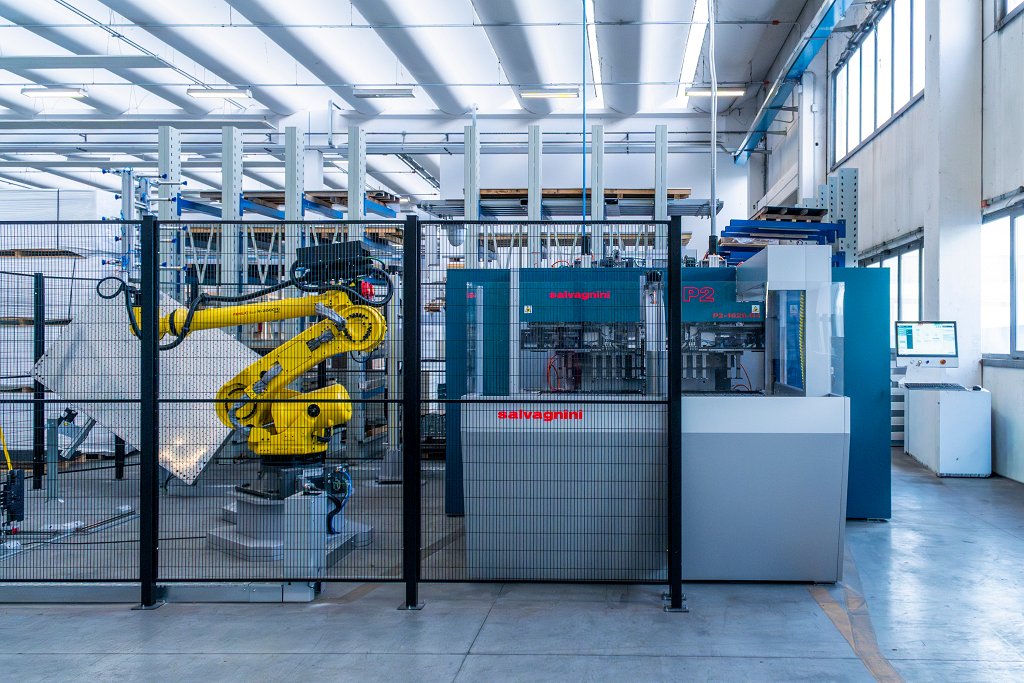
The robot is programmed directly on the machine in a few, simple steps. The operator defines the loading area, the unloading area and the stacking criteria; the control software autonomously calculates the ideal trajectories for the robotic arm, eliminating downtimes for programming.
The last frontier for Salvagnini automation is the implementation of artificial vision in the robotized cell, which increases the level of system “intelligence”.
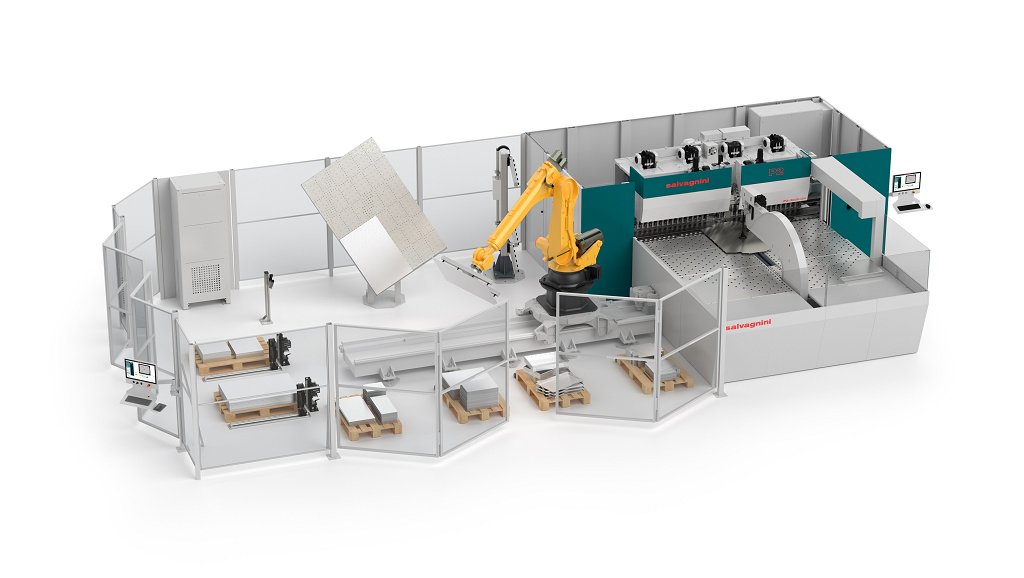
“In a scenario of maximum integration – explains Artuso – an AMR, which is an autonomous mobile robot, picks up the cut parts from a laser machine and positions the pallet in the work area of the panel bender. At this point, the P-Robot uses artificial intelligence to scan the area, recognize the previously coded part and start production automatically."
With such an advanced technological scenario, which is supported by a production hub in Austria with more than 450 employees dedicated exclusively to the development of this specific technology, the high value of the Salvagnini brand is widely recognized by the global market. The Vicenza-based company is not limited to selling a system, but also provides an accurate feasibility study, precise calculations of cycle times and a consulting support that accompanies the customer in every step of technological transition, guaranteeing high levels of training, process quality and safety.